
A project can be busy and still drift away from its fee. A useful weekly review brings the work, the time and the next decision into the same conversation. It does not need to become another long reporting meeting.
For a small architecture practice, start with the projects that need a decision: a stage is nearly complete, recorded time is rising faster than expected, the team is waiting on information, or a client has requested more work. Review by exception, then leave with a short action list.
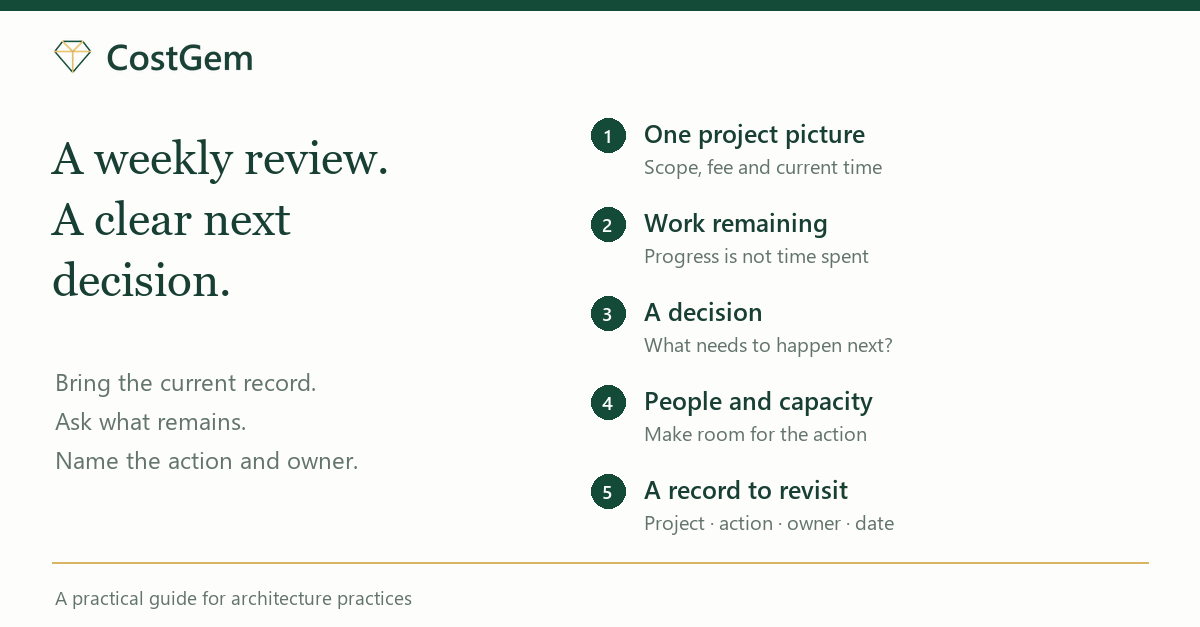
1. Bring the same project picture
Before the meeting, put the agreed scope and stage fee beside the current time position. Add the work still to complete, any outstanding client decisions and the next invoice milestone. Use one reporting date so people are discussing the same period.
Check whether time is up to date before interpreting the totals. Missing entries can make a project look healthier than it is. Keep billable and unbillable work visible, and agree how the practice treats internal review, rework and work outside the original scope.
2. Separate progress from time spent
Time consumed is not the same as work completed. Ask the project lead what remains, what is uncertain and what could stop the next stage. A drawing package waiting on a major client decision needs a different response from one that is ready for a final check.
Use a simple example to make the discussion concrete. If a synthetic project has used 70 of its 100 planned hours, the useful question is not just whether 30 hours remain in the plan. It is whether the team expects to finish the agreed work within those 30 hours. The estimate may change as new information arrives; record the reason rather than treating the original plan as a forecast.
3. Identify the decision before moving on
For each exception, choose the next action. That might mean clarifying scope with the client, obtaining missing information, adjusting the internal work plan, arranging a senior review or preparing an invoice at the agreed milestone. A budget variance is a signal to investigate, not an automatic instruction to invoice more.
- What changed since the last review?
- What work remains, and what is the current estimate to finish?
- Is there a scope question to resolve before more work begins?
- Who will take the next action, and by when?
4. Check the people and the next week
A project action needs room in someone’s week. Check upcoming commitments and dependencies before promising a delivery date. If the same person is critical to several deadlines, make the priority explicit. A short conversation about sequencing is more useful than a plan that assumes everyone is available at once.
5. Finish with a record you can revisit
Keep the outcome small: project, decision, action, owner and review date. At the next meeting, begin with the previous actions. If an item keeps returning, ask whether the obstacle is unclear responsibility, missing information or a decision that needs the principal’s attention.
The first useful result is a shared decision about what happens next. Start with one project and a consistent weekly check, then expand the habit once the team finds it useful.
For more background, read about tracking billable and unbillable hours, or explore CostGem’s time and practice management features.